Next-Gen Telescope to Map Skyscraper-Sized Asteroids and Cosmic Transients
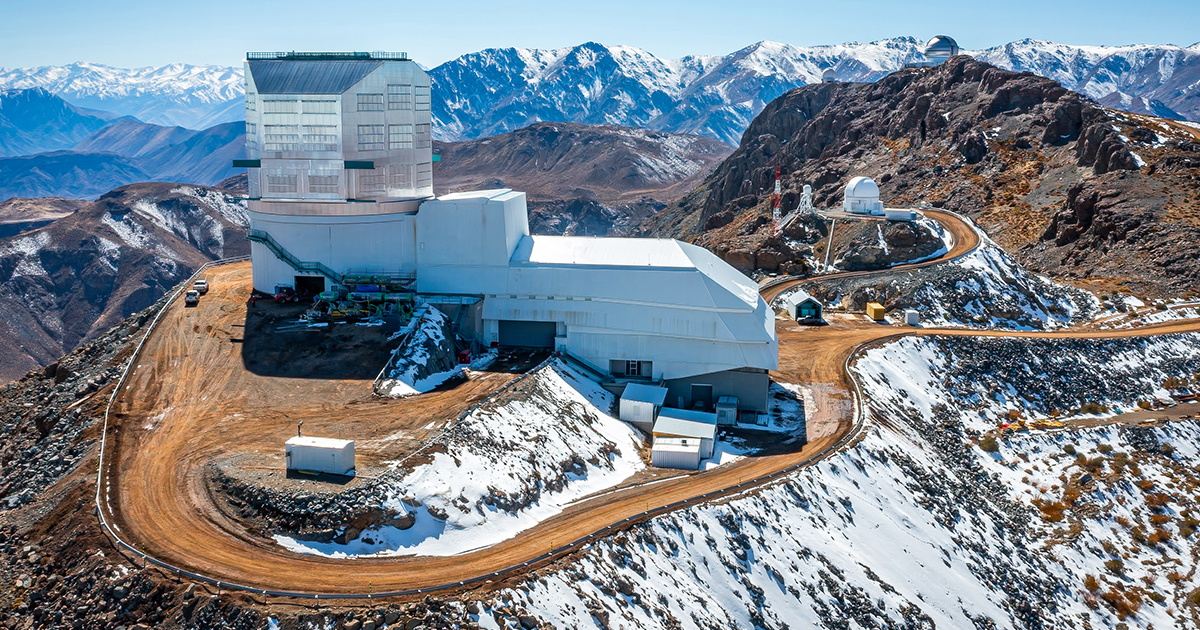
The deployment of the Rubin Observatory represents a significant leap in global astronomical capability, promising to revolutionize our understanding of the deep cosmos. This powerful new facility is designed to conduct massive, repeated sky surveys, enabling scientists to monitor phenomena previously too faint or fleeting to detect. Its advanced instrumentation will provide unprecedented data streams, tracking objects ranging from massive near-Earth bodies to exotic stellar explosions.
One of the most immediate scientific targets is the detection of unusually large asteroids. The Observatory's sensitivity will allow researchers to monitor celestial debris fields and track potentially hazardous objects that approach Earth. These are not merely small space rocks; the system is equipped to observe bodies comparable in size to modern skyscrapers. Such tracking capabilities are crucial for planetary defense strategies and for refining models of the solar system's formation and evolution.
Beyond tracking physical debris, the facility is uniquely positioned to study extreme stellar events. Scientists will observe transients, including failed supernovae, which are massive stellar explosions that do not result in the expected bright light curve. Analyzing these complex energy signatures offers vital insights into the death throes of stars and the physics governing the most violent processes in the galaxy. This data is essential for refining models of stellar nucleosynthesis and understanding cosmic energy output.
Furthermore, the Rubin platform is expected to monitor interstellar visitors—objects that originate outside the solar system. By charting the trajectories of these passing celestial bodies, researchers can glean information about the composition and dynamics of other star systems. The analysis of these interstellar objects provides a tangible link to galactic dynamics, helping astrophysicists piece together a picture of the broader stellar neighborhood.
Collectively, the data gathered by the Rubin Observatory will generate an enormous dataset, providing a wealth of information spanning stellar mechanics, planetary safety, and galactic structure. The sheer volume and breadth of observations promise to redefine humanity's knowledge of the physical laws governing the universe.
Related Articles



Source : Hacker News
This article is AI-generated. The information presented may not be exhaustive or up to date.