China Launches LineShine Supercomputer, Emphasizing Domestic CPU Power

The National Supercomputing Center in Shenzhen has unveiled LineShine, a powerful new computing system designed to bolster China's internal technological resilience. This deployment marks a significant strategic pivot, showcasing a high-performance architecture that relies predominantly on domestic central processing units (CPUs) rather than specialized graphics processing units (GPUs). The advanced machine boasts a theoretical processing capacity of up to 1.54 exaFLOPS, signaling Beijing's commitment to reducing reliance on foreign advanced hardware components.
The core of the LineShine system is built around a substantial array of indigenous processors. Specifically, the architecture utilizes 2.45 million domestic CPU cores, powered by Armv9-based LX2 processors. Each individual LX2 unit contributes 304 CPU cores to the overall computational capacity. This design choice represents a deliberate departure from the prevailing trend in global supercomputing, where immense computational power is often achieved through the massive parallelization capabilities of GPU clusters. By focusing heavily on CPU density and domestic manufacturing, China is building a computing infrastructure optimized for national self-sufficiency.
This technological emphasis suggests a strategic effort to insulate critical national computing research from global supply chain vulnerabilities. While many international supercomputers achieve peak performance through the integration of thousands of discrete GPUs, LineShine’s architecture positions high core count and efficient CPU operation as its primary competitive advantage. This shift underscores a national policy prioritizing the maturation of the domestic semiconductor and processor ecosystem. Industry analysts view this move as a direct response to escalating geopolitical tensions surrounding advanced computing technology.
The operational capacity of LineShine is expected to drive research across multiple high-demand sectors, including advanced scientific modeling, AI development, and complex data analytics. The deployment signals that China views computing power not merely as a tool, but as a foundational pillar of its future economic and military strength. The ability to scale computational power using entirely homegrown components solidifies the nation's position as a major player in the global high-performance computing landscape.
Ultimately, the introduction of LineShine solidifies China's ambition to achieve full technological autonomy in the supercomputing domain, setting a new standard for domestically sourced high-performance computing infrastructure.
Related Articles


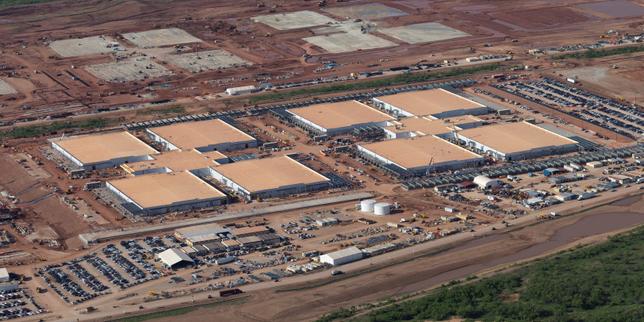
Source : Technode.com
This article is AI-generated. The information presented may not be exhaustive or up to date.