AI Impact on Workforce: Separating Market Hype from Economic Reality

The discussion surrounding artificial intelligence and its potential effect on global employment has reached fever pitch, generating widespread concern among professionals and investors alike. However, a closer examination of current labor market data suggests that the alarmist predictions regarding massive, immediate job displacement in knowledge sectors may be overstated. Instead of an outright technological collapse of employment, the prevailing trend points toward profound professional shifts and necessary skill augmentation.
The intensity of the fear surrounding AI’s ability to automate cognitive tasks has been amplified by media cycles and breathless predictions. Yet, economic analysis suggests that while AI is undeniably reshaping workflows, concrete evidence of large-scale, irreversible job elimination remains elusive. Most experts caution that the technology functions more as a powerful co-pilot than a full replacement for human expertise. The challenge for industries is therefore not simply survival, but rather adapting established roles to incorporate AI tools to maximize efficiency and output.
From a business strategy perspective, the narrative should pivot away from fearing obsolescence and toward embracing augmentation. Instead of viewing AI as a force that eradicates entire job categories, companies are increasingly implementing it to boost productivity within existing roles. This structural change requires a massive reinvestment in human capital, compelling educational institutions and corporate training programs to rapidly adjust curricula. The focus is shifting toward uniquely human skills—critical thinking, complex problem-solving, emotional intelligence, and creative strategy—which remain resistant to current automation capabilities.
Furthermore, the adoption curve for AI tools is uneven across industries, meaning that disruption is happening department by department, rather than universally overnight. This granular integration allows workers time to adapt and upskill. Consequently, the immediate economic impact appears to be less about mass redundancy and more about a rapid restructuring of daily professional tasks, requiring employees to become adept at managing and optimizing AI outputs.
Ultimately, the true economic story unfolding is one of transformation rather than catastrophe. While the pace of technological change necessitates vigilance, global professionals must focus on mastering the new tools available to them, ensuring that continuous learning remains the defining professional mandate of the next decade.
Related Articles

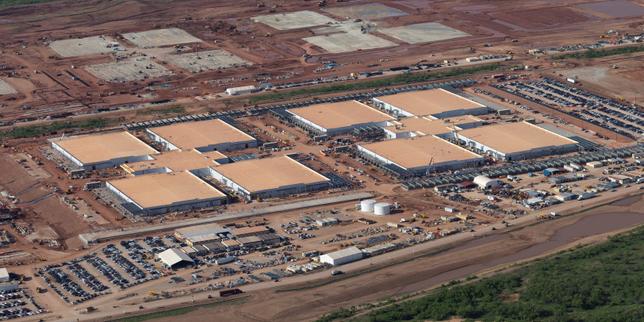

Source : MIT Technology Review
This article is AI-generated. The information presented may not be exhaustive or up to date.