Delacroix Masterpiece Undergoes Advanced Conservation at the Louvre
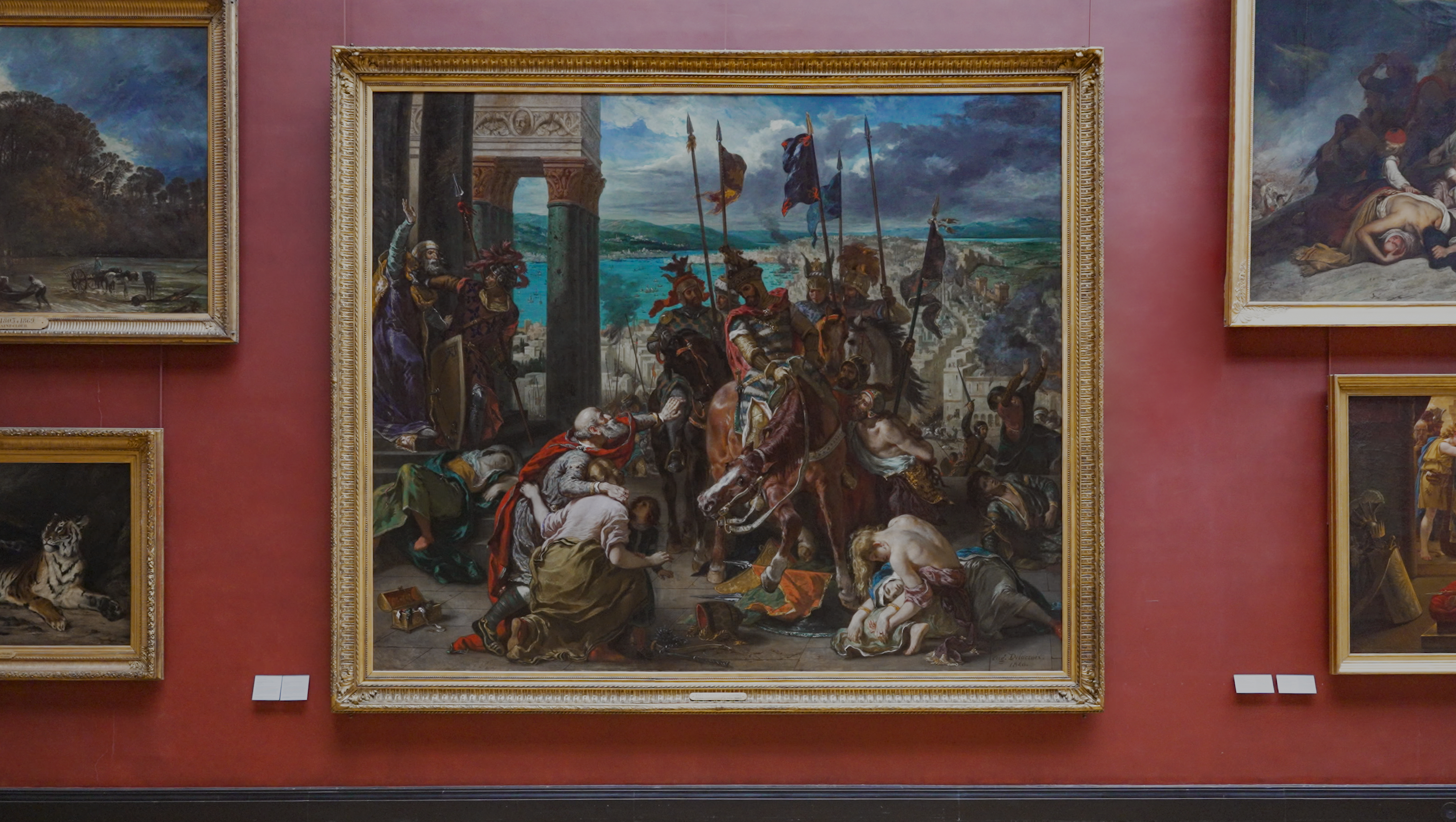
The Louvre Museum has unveiled a significant conservation project involving Eugène Delacroix’s monumental painting, *The Entry of the Crusaders into Constantinople*. This extensive restoration effort has returned the artwork to a state of remarkable visual clarity, allowing modern audiences to appreciate the painter’s original scope and detail. The work represents a major collaboration between art historians and conservation scientists, emphasizing the ongoing technological commitment to preserving global cultural treasures.
The painting itself captures a dramatic historical moment, depicting the arrival of the Crusader forces in Constantinople. Delacroix utilized the piece to explore themes of conflict, cultural exchange, and grand historical narratives, establishing it as a pivotal work in 19th-century European art. Such large-scale historical canvases are invaluable records, providing visual insights into periods of immense geopolitical upheaval. The restoration process was necessary due to decades of environmental wear and the accumulated damage inherent in such an aged masterpiece.
Crucially, the conservation process highlights the integration of advanced scientific techniques into museum practice. Modern conservation science employs specialized imaging and chemical analysis to identify the precise composition of the paint layers and the degradation points over time. By using non-invasive methods, experts were able to stabilize the pigments and repaint the affected areas while ensuring that the intervention was fully reversible and scientifically documented. This methodology exemplifies how contemporary technology is supporting historical art preservation, moving beyond mere cleaning to deep structural recovery.
Beyond the artistic merit, the successful restoration carries significant implications for the cultural economy. Major conservation projects like this underscore the immense financial and intellectual investment required to maintain world-class heritage sites. They reinforce the global value placed on art as a tangible asset, attracting academic research, cultural tourism, and philanthropic funding. The careful preservation of such works ensures that these narratives remain accessible to future generations of scholars and the public.
The renewed visibility of Delacroix’s canvas serves as a powerful reminder that the preservation of historical art is not merely an act of remembrance, but an active, technologically sophisticated endeavor critical to global cultural continuity.
Related Articles



Source : Hacker News
This article is AI-generated. The information presented may not be exhaustive or up to date.